

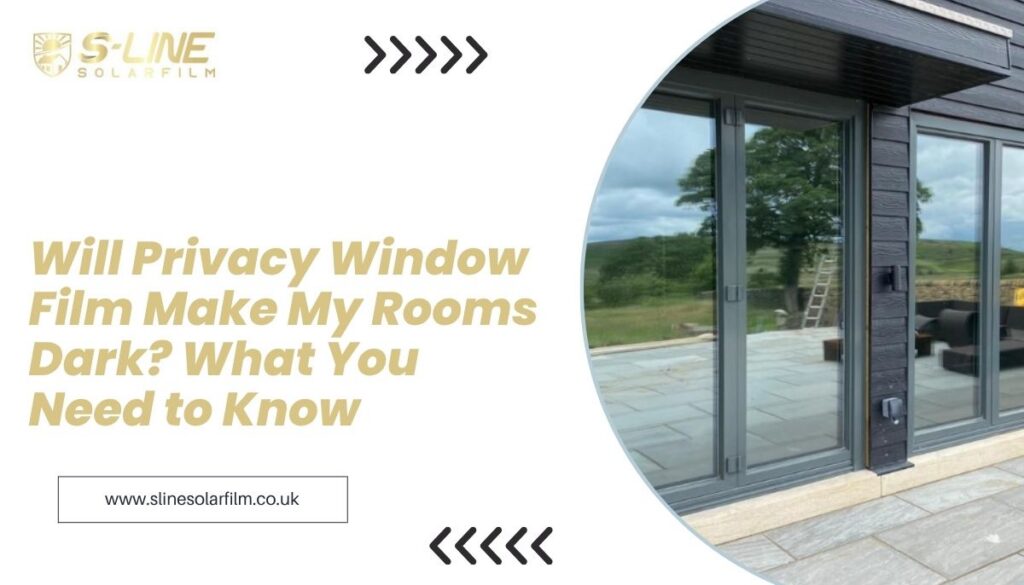
If you have been considering privacy window film in London, you may be wondering: will it make my rooms too dark? It’s one of the most common questions we hear from homeowners, and it’s a fair one.
No homeowner wants to solve an overlooking problem only to end up with dark, unwelcoming rooms. The good news is that modern privacy window film is designed to keep your rooms bright while making it much harder for people outside to see in during the day. Most of the natural light still comes through, depending on the film you choose, so your home keeps its bright, open feel. It is worth knowing from the start that privacy levels vary at night when interior lights are on, which we explain further below. That said, there are a few other important points worth understanding before you decide. This guide covers everything you need to know.
How Privacy Window Film Actually Works
Privacy window film works on a simple principle: contrast. During daylight hours, the film reflects the brighter exterior back towards anyone looking in, making it very difficult for them to see through. From inside your home, however, you still have a clear view out.
This creates a one-way mirror effect. You get daytime privacy without relying on blinds, curtains, or shutters. Natural light still fills the room, and from the inside, your windows look much the same as before. The main thing that changes is what your neighbours and passers-by can see, which, in good daylight, is very little.
For London homeowners, it has become a popular alternative to heavy window dressings that block light and make rooms feel closed in. Whether it is a terraced house in Hackney, a garden flat in Clapham, or a new build in Greenwich, privacy film solutions like this offer a practical answer to overlooking, a problem that curtains and blinds were never really designed to solve.
Will It Reduce Light Levels?
It is important to be clear about this. Privacy window film has a slight tinting effect, meaning a small percentage of light is filtered rather than fully let through. How much depends on the selected film type and specification. Lighter options are barely noticeable, while others have a stronger reflective finish.
In practice, with the right film for the room, most homeowners find their rooms feel just as bright as before. The film cuts harsh glare from direct sunlight without making the interior feel dark or gloomy.
South-facing rooms are a common concern in London properties, and here the reduction in glare can make the space noticeably more comfortable throughout the day. This is especially useful when solar control film is installed alongside privacy film, providing glare control and heat reduction in a single application.
If you are concerned about light levels in a room that already gets limited daylight, speak to a specialist installer before making a decision. An experienced fitter will recommend the most suitable product for your glazing type, the direction that your windows face, and your privacy needs.
What About Night-Time?
This is an important detail that is not always explained clearly. The one-way mirror effect depends on the outside being brighter than the inside. During the day, this is usually the case. After dark, with interior lights on and the outside in darkness, the contrast reverses, and the film no longer gives the same level of privacy.
If evening privacy matters to you, particularly in ground-floor rooms or properties facing busy streets, the answer is simple. A lightweight blind or curtain used after dark is all you need. The film looks after privacy during the day, when overlooking is most likely, and the blind takes over in the evening, so the two work well together.
Beyond Privacy: What Else Does Window Film Do?
One of the lesser-known advantages of privacy window film is that it does more than stop overlooking. Many films also offer useful solar control, reducing heat buildup in summer and glare year-round. If you’re already exploring solar window film in London, the technology overlaps closely with privacy film, and you can often get both benefits from a single installation. It’s a practical upgrade that improves comfort without any building work.
Security window film in London is another option worth knowing about, even though its main purpose is different. This type of film can help hold shattered glass together if a window is struck or smashed, improving glazing safety, although performance depends on the product specification and installation. Some homeowners choose a combined film that offers both privacy and improved glazing safety in a single installation.
It’s a particularly sensible choice for ground floor windows, glazed front doors, and any glass that faces a public footpath or road. For homes with young children or in higher-risk areas, a security-rated film can add a layer of glazing safety that privacy film alone doesn’t provide.
Is Privacy Window Film Right for Your Home?
If you’re tired of keeping blinds closed in the middle of the day, or you’ve recently moved into a property where overlooking is an issue, privacy window film in London is worth serious consideration. It’s a clean, modern solution that preserves the look of your glazing, keeps your rooms bright, and ends the daily frustration of feeling watched in your own home.
Installation is also quick and non-invasive, and it can be a more affordable alternative to replacing your glass with frosted glass or fitting external screening, depending on the project. There’s no mess, no building work, and very little disruption to your home.
S-Line Solarfilm has extensive experience installing window film across London and the surrounding counties. Every installation is carried out by an experienced team using high-quality films, backed by a manufacturer’s warranty. We confirm the warranty terms for your chosen film before work begins.
Frequently Asked Question
Only slightly, depending on the film type and specification you choose. Most homeowners notice little difference in light levels, as the film reduces glare rather than blocking natural light.
Yes. During daylight hours, you have a clear view out, while in suitable daylight conditions people outside will find it very difficult to see in. Privacy levels vary at night when interior lights are on.
The one-way effect relies on the outside being brighter than the inside. After dark, with interior lights on, privacy is reduced. A lightweight blind or curtain easily solves this.
No. It can be professionally removed without damaging the glass, making it suitable for rental properties too.
When installed correctly by a professional, privacy window film does not damage glass, frames, or seals.
Yes, in most cases. A specialist will assess your glazing before installation to confirm suitability.
Most residential installations are completed within a few hours, depending on the number of windows.
Many films offer both solar control and privacy. If heat reduction is a priority, ask your installer about combined solar and privacy window film options. Many homeowners who choose solar window film in London also opt for a film with a built-in privacy feature.
With professional installation, quality film can last for many years, depending on the film type, the glazing, and how much direct sun the window receives. S-Line Solarfilm installs films backed by a manufacturer’s warranty, and your installer will confirm the warranty terms for the film you choose.
Yes. Privacy window film can be applied to most window types, including sash windows, bay windows, and contemporary double glazing. Your installer will recommend the best approach for your specific windows.